
Monthly SRW Report Documents Surge in Anti-Shiism Incidents, War-Related Civilian Casualties
Monthly SRW Report Documents Surge in Anti-Shiism Incidents, War-Related Civilian Casualties
—————————————
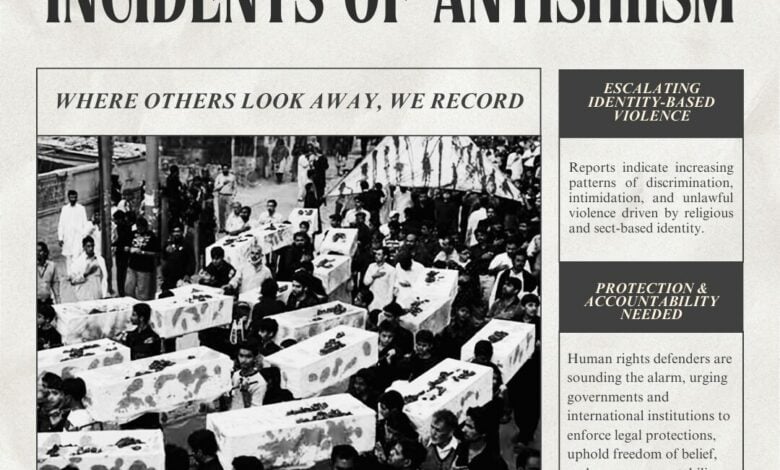
A new monthly report by Shia Rights Watch (SRW) paints a troubling picture of escalating violence and discrimination against Shia Muslims across multiple countries between March 1 and April 1, 2026, while also documenting heavy civilian losses linked to ongoing war in the Middle East.
According to the report, violations ranged from targeted killings and abductions to restrictions on religious practices and forced displacement, reflecting what SRW describes as a persistent pattern of identity-based persecution.
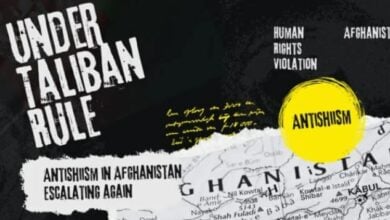
Across Afghanistan, authorities reportedly restricted the performance of Eid prayers according to the Jaafari school in Kabul and Herat, while Hazara families faced ongoing forced displacement from ancestral lands in Daikundi and Bamiyan. In Pakistan, sectarian violence intensified, with armed groups carrying out ambushes and road blockades in the Kurram region targeting Shia civilians.
In Bahrain, the report describes a broad security crackdown, including restrictions on collective prayer, mass arrests exceeding 200 individuals, and cases of religious persecution. It also documents the death of a detainee, Mohammed Al-Mousawi, in custody under alleged torture. Meanwhile, in India, violence during a religious procession in Murshidabad led to the destruction of around 40 shops and multiple injuries, with groups linked to Hindutva ideology implicated. In Kuwait, authorities imposed tight limits on religious commemorations, restricting gatherings marking the martyrdom of Imam Ali (peace be upon him) to brief, centrally controlled events.
The situation was most severe in Syria, where SRW documented a wide-ranging pattern of violations including assassinations, abductions, arbitrary detention, and attacks on civilians and religious sites. The report details numerous killings, including that of a child in Homs, as well as repeated kidnappings involving women and minors. It also highlights the discovery of multiple bodies following abductions, widespread vandalism of shrines and cemeteries, and armed raids on civilian homes accompanied by looting and violence. In addition, large-scale dismissals from public sector jobs—affecting doctors, teachers, and hundreds of other employees—were reported, raising concerns about economic targeting alongside physical violence.
Alongside these incidents, the report underscores the devastating human toll of the ongoing regional conflict. In Iran, preliminary estimates indicate approximately 1,444 civilian deaths, with some figures exceeding 1,900, and between 18,551 and 20,000 injuries. The International Organization for Migration reported extensive infrastructure damage, with around 82,000 civilian buildings affected across 20 provinces, impacting roughly 180,000 people.
In Lebanon, the conflict has also taken a heavy toll, with 1,268 civilian deaths and 3,750 injuries recorded by the end of March. The report notes that approximately 15% of the population has been displaced, particularly from predominantly Shia areas, alongside restrictions on returning to areas south of the Litani River. It also cites verified reports of white phosphorus being used in civilian areas such as Kfarkela and Mays Al-Jabal.