
The Escalation of U.S.-Iran Confrontation with Reciprocal Strikes and Threats to Navigation in the Strait of Hormuz
The Escalation of U.S.-Iran Confrontation with Reciprocal Strikes and Threats to Navigation in the Strait of Hormuz
The intensity of the confrontation between the United States and Iran has escalated with reciprocal strikes and attacks in the Gulf region, coinciding with increasing concerns about the security of navigation in the Strait of Hormuz, one of the world’s most crucial maritime passages for oil and energy transport.
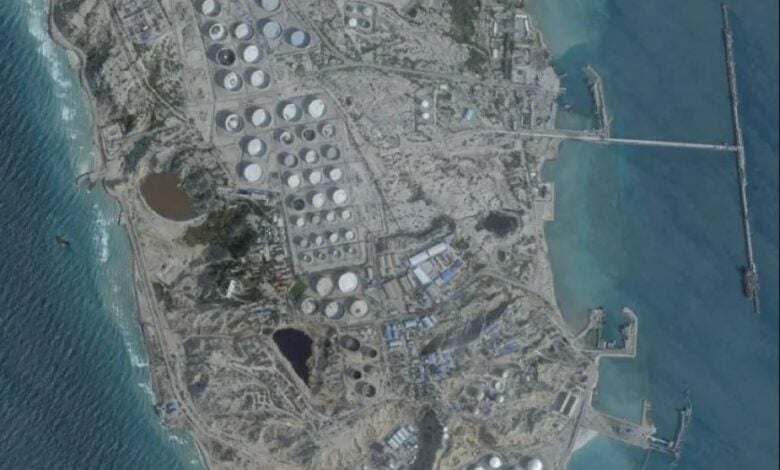
U.S. President Donald Trump stated that Iran’s Kharg Island, a key center for oil exports, is undergoing extensive destruction, without providing additional details. The island holds strategic significance as it used to handle about 90% of Iran’s oil exports before the outbreak of the U.S.-Israeli war on Iran on February 28.
In another development, a U.S. official reported that American forces carried out strikes targeting launch platforms on Iran’s Larak Island, after observing Revolutionary Guard forces preparing, according to Washington, to launch missiles laden with naval mines towards the Strait of Hormuz. The U.S. Central Command described the operation as a “limited and precise” strike, stating it targeted Iranian capabilities related to mine planting, amidst concerns about threats to ship movements in the strait.
Conversely, Iran announced the launch of ballistic missiles towards U.S. bases in Jordan, while the Jordanian Armed Forces reported intercepting eight missiles that had entered the country’s airspace. The Iranian Foreign Ministry stated that the attack was in response to the U.S. strike on Larak Island, warning of retaliation against any new attacks.
Additionally, the Iranian military announced a drone attack on the Al Minhad Air Base in the UAE, claiming it targeted sites with American forces and military equipment, without an immediate response from the UAE regarding the announcement.
In the Strait of Hormuz, the Iranian Revolutionary Guard announced the downing of an American “MQ-9” drone and reported the collision of a giant oil tanker with two naval mines in the southern part of the strait, which caused a fire and halted the ship, without revealing its identity or the fate of its crew.
These developments coincided with a decline in shipping activity through the Strait of Hormuz, amid increasing security risk concerns from shipping companies, while maritime data showed a significant decrease in the number of commodity ships passing through the maritime corridor.
On the economic front, U.S. Treasury Secretary Scott Pessant announced that Washington is moving to impose new secondary sanctions on Iran on a weekly basis, aiming at banks and institutions holding Iranian funds or assisting Tehran in accessing the dollar-based financial system.
The mutual military and economic escalation heightens concerns about the security of navigation and energy supplies via the Strait of Hormuz, amidst the ongoing confrontation between Washington and Tehran and the expanding scope of military operations in the region.