
India: Rare Quran Manuscript in Assam Reflects Region’s History of Cultural and Religious Coexistence
India: Rare Quran Manuscript in Assam Reflects Region’s History of Cultural and Religious Coexistence
—————————————
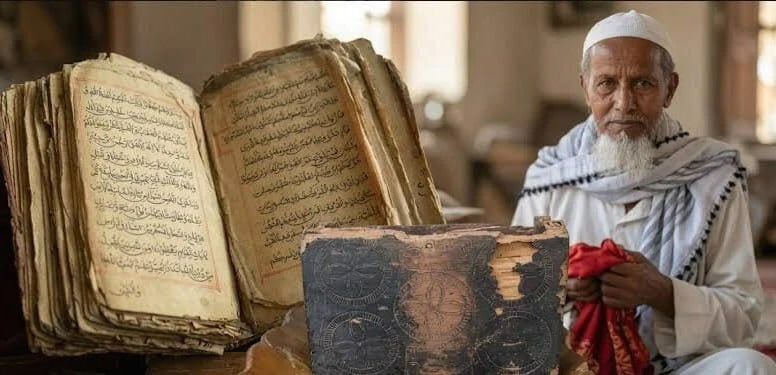
A rare handwritten copy of the Holy Quran preserved in a mosque in India’s Assam state continues to attract visitors and heritage enthusiasts, regarded by local residents as a symbol of the region’s long history of cultural interaction and religious harmony.
The manuscript is kept at a mosque in the Bhalan Bara Chuba area of Pinglishwar village, located in Kamrup district of central Assam. Local communities view the centuries-old Quran not only as a religious artifact but also as a representation of the social and cultural ties that have connected different groups in the region across generations.
According to local accounts, the manuscript was discovered around 1770 after Sheikh Dahi Bid reportedly had a vision indicating the presence of a sacred Quranic manuscript buried in a specific area of a nearby forest. After informing villagers, members of different communities participated in the excavation, where they found an old wooden box containing the handwritten Quran along with other artifacts and ancient coins.
Residents say the discovery near the well-known Pinglishwar Temple gave the story additional symbolic significance, reflecting traditions of mutual respect and coexistence among followers of different faiths in Assam.
Since its discovery, the manuscript has been carefully preserved inside the mosque and is displayed to visitors every Friday after the congregational prayer. Hundreds of people from different areas visit the site each week to view the historic manuscript, which has become part of Assam’s shared cultural heritage.