
Sheikh Baha’i Remembered for Enduring Legacy in Science, Architecture, Shia Civilization
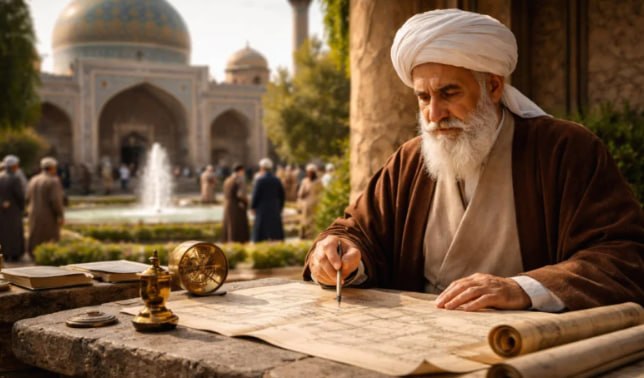
Sheikh Baha’i Remembered for Enduring Legacy in Science, Architecture, Shia Civilization
————————————–
The anniversary of the death of Sheikh Baha’i, observed on the 12th of Shawwal, has renewed attention to the influential scholar’s lasting contributions to science, religious scholarship, and urban development during the Safavid era.
Sheikh Baha’i, widely regarded as one of the most prominent intellectual figures of his time, was known for integrating religious jurisprudence, philosophy, and engineering into practical applications that served society. His work extended beyond traditional scholarly settings, reflecting an approach that emphasized the use of knowledge to improve everyday life.
Historians note that his contributions played a significant role in shaping aspects of Shia civilization, particularly in the Safavid period, where he was involved in urban planning, infrastructure development, and the organization of religious spaces. His multidisciplinary expertise spanned fields such as jurisprudence, astronomy, and architecture, offering a model for combining religious and empirical sciences.
Several landmarks in Isfahan are traditionally associated with his legacy, including educational institutions and contributions to major architectural works such as Si-o-se-pol and Shah Mosque, reflecting the broader scientific and cultural flourishing of the period.
Sheikh Baha’i’s influence is also linked to innovations in water management systems and public infrastructure, underscoring his role in connecting theoretical knowledge with societal needs.
He is buried in Mashhad, within the complex of the Imam Reza Shrine (peace be upon him), where his tomb remains a site of historical and cultural interest for visitors.
Scholars say that despite his wide-ranging contributions, aspects of Sheikh Baha’i’s civilizational role remain underexplored, particularly his emphasis on applying knowledge in service of society—a legacy that continues to resonate in contemporary discussions on the relationship between science, religion, and public life.