
Ramadan Across Africa and Asia: Iftar Initiatives Highlight Social Solidarity from Egypt to Pakistan
Ramadan Across Africa and Asia: Iftar Initiatives Highlight Social Solidarity from Egypt to Pakistan
———————————————-
As the holy month of Ramadan enters its early days, communities across Africa and Asia are marking the occasion not only with prayer and fasting, but with large-scale charitable iftar initiatives that reflect strong traditions of social solidarity, hospitality, and public participation.
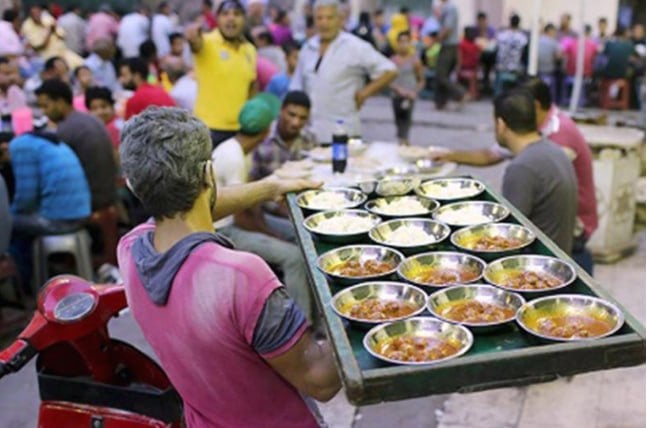
In Egypt, volunteers have once again taken to highways and transport hubs to distribute iftar meal packages to travelers at sunset. Along major roads, including the express ring road in Monufia province, volunteers hand out boxes containing water, dates, and juice to motorists unable to reach home before the call to prayer. Local organizers say the initiative, now in its tenth consecutive year, provides around 300 meals daily on some routes and does not distinguish between wealthy and low-income recipients. Additional full iftar meals are also being distributed at railway stations and busy urban streets in major cities.
In Gabon, communal iftar tables are being organized in mosques and private homes in the capital, Libreville, and other regions. Muslims—many of whom trace their roots to West African countries such as Mali, Senegal, and Nigeria—combine local culinary traditions with broader Islamic customs. Community associations and charitable groups are hosting collective meals for families and those in need, while religious lessons and discussions on fasting and charity accompany evening gatherings.
Similarly, in Cameroon, Ramadan is being observed as both a religious and social occasion. In cities such as Yaoundé, mosques and households open their doors to fasting individuals, travelers, and neighbors. Public iftar tables provide dates, water, milk, and local dishes, with participation extending beyond Muslims in some areas. Mid-month cultural activities, including children’s celebrations and community gatherings, further reinforce social cohesion.
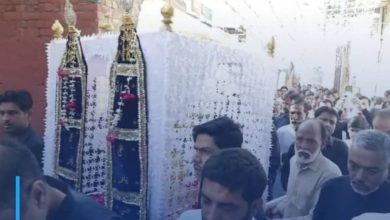
In Pakistan, Shiite communities in Karachi, Lahore, and Islamabad are organizing collective iftars and distributing meal packages along busy streets. Local committees and charitable organizations report distributing hundreds of meals daily, while mosques and religious centers host educational programs alongside evening prayers.
Meanwhile, in Afghanistan, fasting worshippers gathered at the Jafari Grand Mosque in Lashkar Gah, Helmand province, to perform Friday prayers during the second week of Ramadan, emphasizing religious unity and continuity of communal worship.
Across these diverse regions, Ramadan initiatives continue to serve as a visible expression of charity, hospitality, and shared spiritual commitment.