

Era of “Smart Mushaf”: How Technology Is Reshaping Muslims’ Engagement with Quran During Ramadan
Era of “Smart Mushaf”: How Technology Is Reshaping Muslims’ Engagement with Quran During Ramadan
————————————-
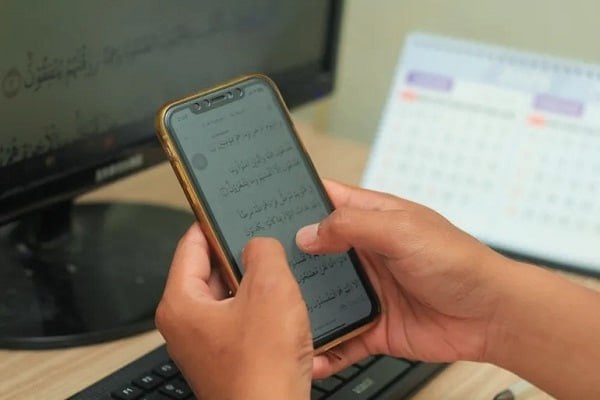
As the digital world continues to evolve rapidly, the mobile phone has moved beyond being a tool for communication or entertainment to become a “digital prayer niche” accompanying Muslims in their daily lives.
During the holy month of Ramadan, Quranic apps on mobile phones have emerged as effective means of deepening engagement with the Holy Quran. Modern Quran applications now go far beyond simply displaying the text, using artificial intelligence and data technologies to offer interactive experiences that open new horizons for reflection, memorization, and revision with a high level of accuracy.
Major technology companies and institutions are increasingly competing to develop comprehensive Quranic platforms that combine instant textual explanations, voice-based recitation correction that simulates the role of a teacher, and extensive tafsir databases that connect users to classical reference works within seconds. These features have made learning and reflecting on the Quran more accessible and effective.
The applications are designed to serve users of different ages and educational backgrounds. Some feature simple and clear interfaces for beginners, with high-quality Quranic fonts and distraction-free reading environments, along with concise explanatory summaries, advanced search functions, and cloud synchronization across multiple devices.
In addition, some platforms now use artificial intelligence to provide interactive quizzes that help users assess their memorization and understanding of verses, link Quranic vocabulary with interpretive meanings, and enhance deeper comprehension. Others connect verses with Quranic narratives or historical contexts to offer a more integrated educational experience.
Beyond education, these applications have also become tools for strengthening daily spiritual routines. Users can schedule reading times, organize daily recitation goals, and track memorization progress with a single click, making technology an active partner in contemporary religious life.
Overall, Quran applications represent a clear example of how technology can serve the Quran and integrate it into the digital lifestyle, whether through reflection, memorization, or listening to recitations by renowned readers, highlighting the growing role of the digital world in supporting the spiritual experience of Muslims today.