
Germany: Islamic Religious Education in Schools Helps Counter Social Polarization
Germany: Islamic Religious Education in Schools Helps Counter Social Polarization
—————————————–
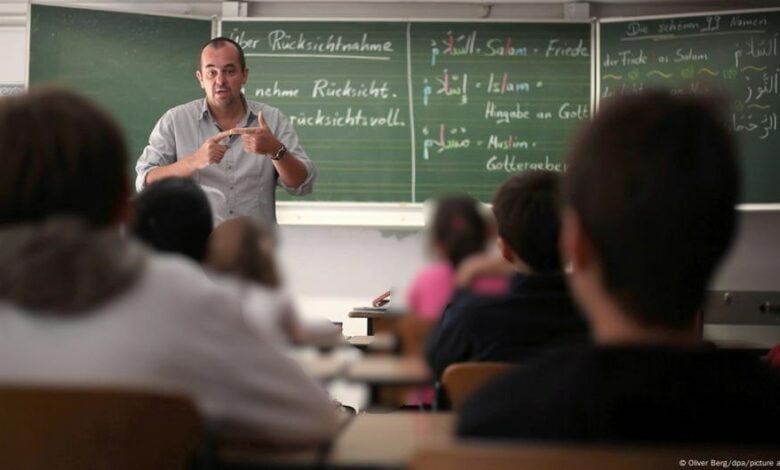
A study conducted by Münster University has found that Islamic religious education in schools in North Rhine-Westphalia positively contributes to fostering understanding of core democratic values, reducing extremist attitudes, and lowering levels of antisemitism and misogyny among Muslim students. However, the program faces challenges related to representation of the Muslim community and the influence of conservative associations.
Dorothee Feller, the state’s Minister of Education, said that the lessons, taught in German using a standardized curriculum, provide Muslim students with supportive guidance, particularly amid social media content that spreads polarization, hatred, or misinformation. She added that continued participation in the program decreases the likelihood of students adopting extremist views and increases their willingness to accept religious and cultural diversity.
Currently, approximately 32,000 Muslim students participate in Islamic religious education programs that were launched 14 years ago. The program covers only about 6% of the state’s more than 500,000 Muslim students and faces significant challenges in recruiting qualified teachers.
The program initially operated under an independent advisory council, replaced in 2021 by a partially open-membership committee to improve representation of diverse Muslim groups. Critics argue that representation remains limited and that some organizations dominating the program may reflect conservative or foreign influences, raising concerns about educational independence and credibility.
Supporters emphasize that Islamic religious education is not only a tool against extremism but also a fundamental right for Muslim students to receive structured and balanced religious instruction that promotes social and cultural integration. Critics warn that mismanagement could limit ideological diversity and undermine educational objectives.