
Sudan Faces World’s Largest Displacement Crisis as Fighting and Starvation Worsen in Darfur
Sudan Faces World’s Largest Displacement Crisis as Fighting and Starvation Worsen in Darfur
————————————–
Sudan has become the site of the world’s largest displacement crisis, with nearly 13 million people forced from their homes by a two-year civil war, as humanitarian agencies warn that conditions in parts of the country—particularly the besieged city of El-Fasher in North Darfur—are rapidly deteriorating amid mass killings, starvation, and the collapse of basic services.
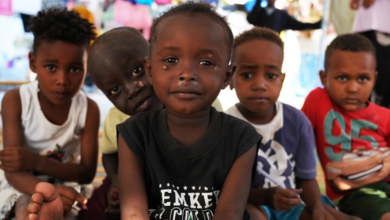
The International Organization for Migration (IOM) said the ongoing conflict between the Sudanese Armed Forces and the Rapid Support Forces (RSF), which erupted in April 2023, has triggered unprecedented levels of displacement. According to the agency, the crisis affects all segments of society, from mothers fleeing with newborns to students separated from their families, underscoring the scale and depth of the humanitarian emergency.
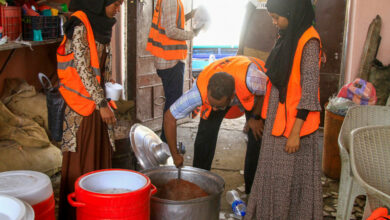
The IOM noted that assistance provided through the UN’s Central Emergency Response Fund has enabled life-saving support and rapid aid delivery, but warned that needs continue to outpace resources as fighting persists. Mediation efforts to end the conflict have so far failed, while tens of thousands of people have been killed and millions uprooted.
International media and humanitarian reports indicate that intense clashes continue in the three Kordofan states—North, West, and South—displacing tens of thousands more. The RSF currently controls all five states of the Darfur region in western Sudan, while the army holds most of the remaining 13 states, including the capital, Khartoum.
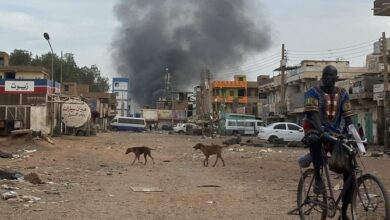
The World Food Programme (WFP) has raised particular alarm over El-Fasher, warning that conditions there are “beyond horrific.” Between 70,000 and 100,000 civilians are believed to remain trapped in the city amid mass killings, burned bodies, and abandoned markets. Communications blackouts have limited information, but satellite imagery and survivor accounts describe widespread destruction and the absence of functioning trade routes or humanitarian operations.
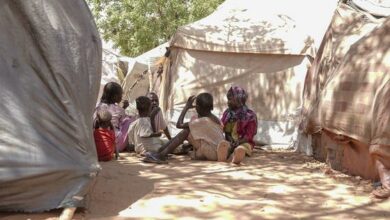
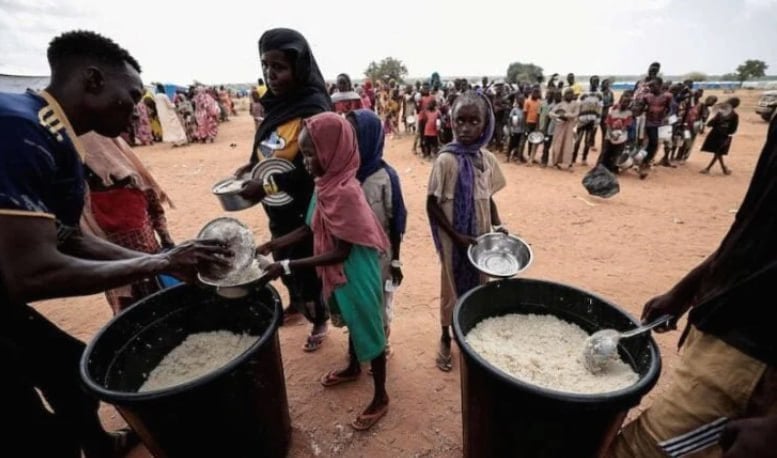
WFP officials said fleeing El-Fasher is extremely dangerous due to looting, gender-based violence, and roads contaminated with mines and unexploded ordnance. Many who escape arrive in areas where aid systems are already overstretched, such as Tawila, where more than 650,000 displaced people are sheltering in overcrowded conditions and cholera is widespread.
The WFP has called for unimpeded humanitarian access to El-Fasher, saying it is ready to deliver food immediately if safe passage is secured. The agency also warned that without urgent international funding, food rations will be cut in 2026, risking further deterioration in what it describes as the world’s largest humanitarian disaster.