
Muslims Mark 17 Ramadan with Remembrance of Mi’raj and Battle of Badr
Muslims Mark 17 Ramadan with Remembrance of Mi’raj and Battle of Badr
————————————-
The 17th day of the Islamic month of Ramadan commemorates two major events in Islamic history: the Ascension of the Holy Prophet (peace be upon him and his pure family) and the historic Battle of Badr.
More details in the following report:
Both events hold an important place in Islamic teachings and are frequently highlighted in Shiite narrations for their spiritual and historical significance.
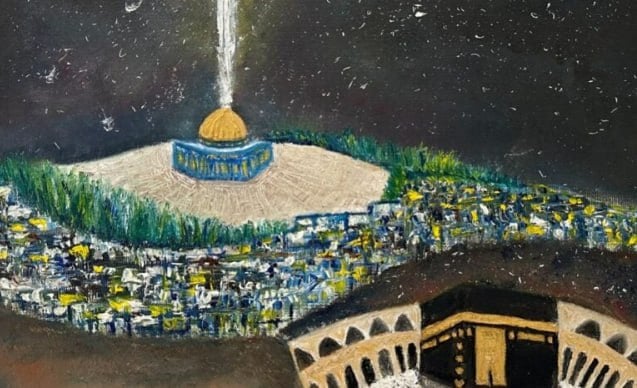
According to Islamic tradition, the Night Journey—known as Isra and Mi’raj—occurred about six months before the Prophet’s migration from Mecca to Medina. The journey began at Masjid al-Haram and continued to Al-Aqsa Mosque, although some Shia narrations clarify the latter as being a heavenly place in the skies rather than the famously known mosque in Palestine. Islamic sources state that the Holy Prophet was transported by divine command on a heavenly mount known as Buraq, marking the stage referred to in the Qur’an as Isra.
Shiite narrations attributed to the Imam Ja’far al-Sadiq and Imam Ali (peace be upon them both) describe the event as a profound spiritual ascent in which the Holy Prophet passed through multiple levels of the heavens and encountered earlier prophets. The journey culminated at Sidrat al-Muntaha, a station described in the Qur’an as one of the highest realms of the unseen world. Shiite traditions also emphasize that during this night the obligation of the five daily prayers was established and that the Prophet was shown visions of paradise, hell, and aspects of divine creation.
The same date is also linked to the Battle of Badr, which occurred in the second year after the Hijra between the early Muslim community and the Quraysh of Mecca. Despite their smaller numbers, the Muslim forces achieved a decisive victory in the area between Mecca and Medina.
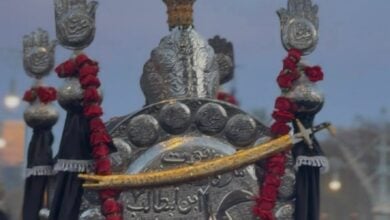
In Shiite historical narrations, particular attention is given to the role of Imam Ali (peace be upon him), who is described as one of the leading warriors of the Muslim army during the battle. Scholars note that the victory at Badr not only carried military significance but also strengthened the political and spiritual confidence of the early Muslim community, becoming a foundational moment remembered in Islamic historical memory.