

Nigeria’s Centuries-Old Tradition of Teaching Quran on Wooden Tablets Continues
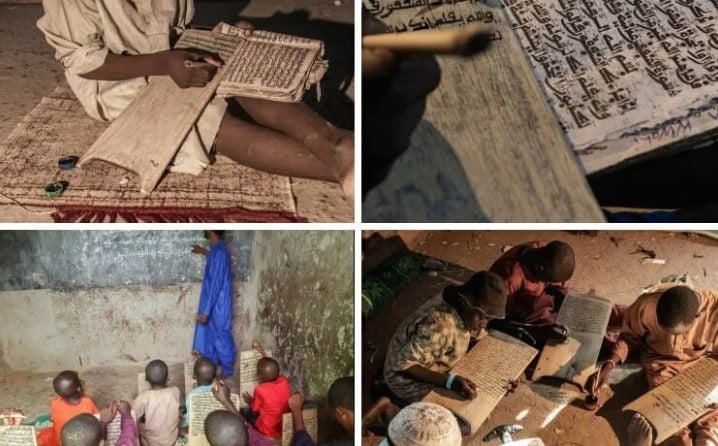
Nigeria’s Centuries-Old Tradition of Teaching Quran on Wooden Tablets Continues
——————————————-
A centuries-old tradition of teaching the Quran using wooden tablets remains alive in Kano, northern Nigeria, preserving a historic method of religious education passed down through generations.
At traditional Quranic learning centers across the city, children and students write Quranic verses on specially prepared wooden tablets before reading, reciting and repeatedly memorizing them. The method has remained an important part of the region’s religious and cultural heritage despite the spread of modern educational tools.
The traditional approach combines writing, reading, recitation and memorization. Under the supervision of a teacher, students copy verses onto the tablet, practice reading and memorizing them, and then move on to new passages once they have mastered the assigned verses.
Wooden tablets remain a distinctive feature of traditional Quranic education in northern Nigeria, where local communities have maintained the practice despite the widespread availability of printed books and digital technologies.
The continued use of the method also helps preserve religious knowledge and educational practices from one generation to the next, while maintaining an important part of the cultural heritage of Muslim communities in the country.
The tradition in Kano reflects the central place of the Quran in the religious and social life of Muslims in northern Nigeria, as families and traditional educational institutions continue to teach younger generations Quranic reading, recitation and memorization.
As Quranic education methods evolve in other parts of the world, traditional schools and centers in Nigeria continue to use wooden tablets, keeping alive an educational heritage that has endured for hundreds of years.