

Middle East Conflict Disrupts Tourism and Aviation, Causing Major Economic Losses
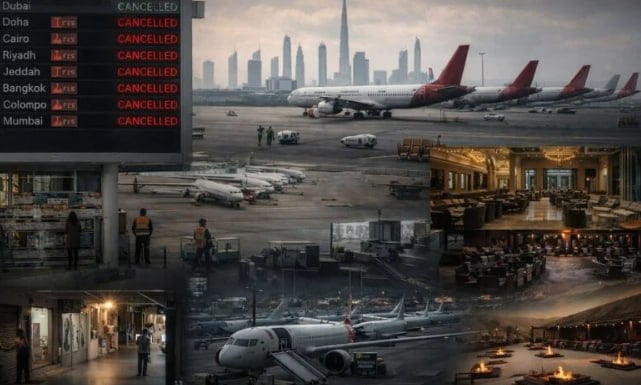
Middle East Conflict Disrupts Tourism and Aviation, Causing Major Economic Losses
———————————
Escalating military tensions in the Middle East have significantly disrupted the region’s tourism sector and placed growing pressure on the global aviation industry, according to industry data and recent reports.
More details in the following report:
The World Travel & Tourism Council estimates that the crisis is costing the region’s tourism industry around $600 million per day in lost international visitor spending. Travel demand has dropped sharply as security concerns and airspace disruptions lead many travelers to cancel or postpone trips.
Forecasts indicate that international arrivals to the Middle East could decline by 11% to 27% in 2026, translating into tens of millions fewer visitors and billions of dollars in lost revenue.
Major tourism and transit hubs in the Gulf — including cities such as Dubai, Abu Dhabi, and Doha — have been affected by reduced passenger traffic and flight disruptions, reflecting the region’s central role in global travel connectivity.
The aviation sector has also been hit hard. Airspace closures, rerouted flights, and operational uncertainty have led to thousands of flight cancellations and reduced airline capacity across the region.
Recent reports indicate that some airlines are operating at significantly reduced levels, while rising jet fuel prices — driven by the conflict — are pushing up operating costs and expected ticket prices.
The decline in tourists has had a direct impact on other related economic sectors.
Hotels, entertainment venues, museums, local markets, and restaurants have experienced a sharp drop in customers, forcing many operators to scale back services or temporarily shut down.
Despite the downturn, industry experts note that global aviation has not collapsed, with demand shifting toward safer destinations and alternative routes. Historically, the tourism sector has shown resilience, with recovery often tied to improvements in regional stability.