
Islam Becomes Germany’s Second Largest Religion as Demographic Shifts Reshape Society
Islam Becomes Germany’s Second Largest Religion as Demographic Shifts Reshape Society
———————————————
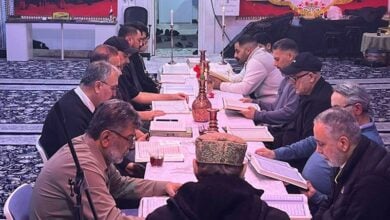
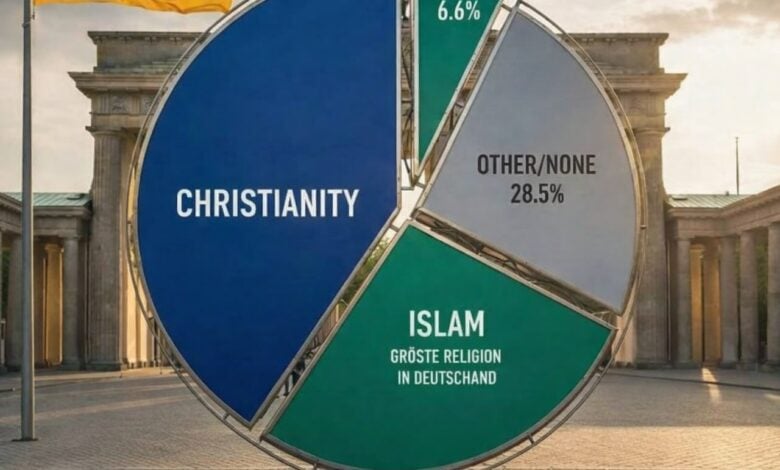
Recent estimates indicate that the number of Muslims in Germany has surpassed five million, making Islam the country’s second-largest religion after Christianity. This demographic milestone reflects decades of migration and cultural transformation.
The presence of Muslims in Germany dates back to the 1960s, when West Germany invited guest workers from Turkey to fill labor shortages. Subsequent waves of migration included refugees from conflict zones, particularly Syria, Iraq, and Afghanistan. Over time, these communities evolved from temporary settlements into permanent social groups, with new generations born, educated, and integrated into German society.
In major cities such as Berlin, Cologne, and Hamburg, Muslims are now a visible part of daily life, with mosques, schools, universities, and business centers coexisting within the urban fabric. A younger generation, fluent in German as a first language, participates actively in the workforce, academia, and civic and political life, illustrating a shift in the concept of belonging within a multicultural society.
Observers note that Islam’s rise as the second-largest religion is not just a religious trend; it signals a broader restructuring of society in a secular state founded on equality before the law. This development raises questions about managing diversity and fostering mutual integration amid ongoing debates on identity, migration, and cultural security.
While there are success stories in education and the economy, challenges of integration and coexistence remain prominent in public discourse. Experts suggest that Germany’s experience offers insights for other modern societies: how to transform diversity from a social challenge into a source of cohesion and resilience.
Beyond statistics, the presence of over five million Muslims reflects a deeper, human story of intersecting identities and cultures, shaping a society striving to balance religious distinctiveness with full participation in contemporary life.