
Oman’s University of Nizwa Completes Six Handwritten Sections of the Holy Quran
Oman’s University of Nizwa Completes Six Handwritten Sections of the Holy Quran
—————————————–
The University of Nizwa in Oman has announced the completion of six sections of a project to handwrite the Holy Quran, as part of an academic and cultural initiative expected to take about two years to complete in full.
The project is being carried out under the supervision of the Ministry of Endowments and Religious Affairs and reflects the university’s efforts to serve the Quran and preserve the traditions of classical Arabic calligraphy. It is implemented through the university’s “Zukhruf” Arabic Calligraphy Studio.
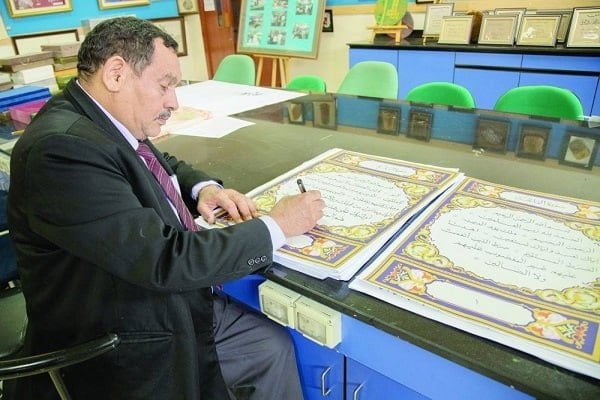
The supervisor of the studio and lead calligrapher said the initiative was launched as one of the university’s flagship projects and received strong support from its administration. He described it as a major achievement for the studio and a motivation to continue creative work in the field of Arabic calligraphy and Quranic service.
According to the project team, the handwritten Quran is intended to serve as a scholarly and cultural addition to the university’s library, document the experience of the calligraphy studio on campus, and contribute to enriching Oman’s religious and cultural heritage more broadly.
The manuscript features specially selected Islamic decorative motifs for its outer frames, with carefully chosen colors designed to balance visual beauty with the dignity appropriate for the Holy Quran. The text is written in Naskh script, selected for its clarity and ease of reading, as it is the most commonly used style for Quranic manuscripts.
Project officials emphasized that the work fully adheres to established rules for writing the Quran, with no alteration to the Quranic text or structure. The artistic contribution is limited to precise letter formation and diacritical marks in accordance with recognized calligraphic standards.
Six sections have been completed so far, with work progressing steadily and under careful review. University students are also involved in preparatory stages, such as ruling lines and spacing the pages, as part of a practical educational experience. The Ministry continues to oversee the project through a specialized committee to ensure accuracy and compliance with scholarly and religious standards.