

Afghan Migrants in Italy Go Through Exploitation, Uncertain Futures
Afghan Migrants in Italy Go Through Exploitation, Uncertain Futures
——————————-
Afghan migrants in Italy face persistent barriers to stable employment, social integration and long-term settlement despite gaining access to asylum procedures and legal residence documents, according to a new report by the Afghanistan Analysts Network (AAN).
The report, published on October 17 by researcher Fabrizio Foschini, says Italy remains an important transit point for Afghans seeking protection or hoping to reach other European countries, particularly Germany and Austria. Low wages, insecure work and limited opportunities for career advancement have discouraged many from settling permanently.
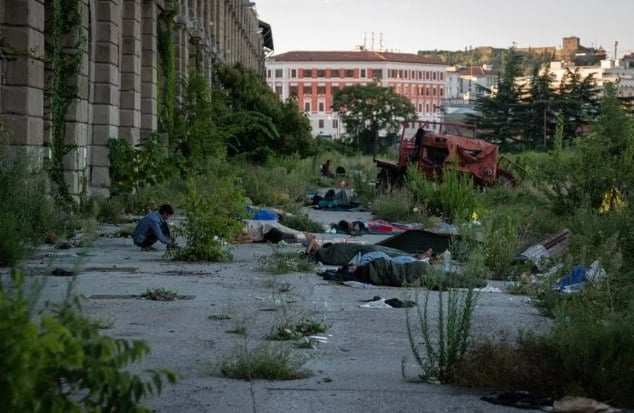
The Afghan population living in Italy reached about 19,000 in 2025, up from fewer than 4,000 in 2011, according to figures cited by AAN. The northeastern city of Trieste has become a major entry point along the Balkan migration route. Local organisations recorded nearly 30,000 Afghans spending time in the city between 2021 and 2026, either while travelling onward or applying for asylum.
Many Afghans who remain in Italy find work in agriculture, tourism, construction and services. However, the report describes widespread problems involving low pay, informal employment, long working hours and unsafe conditions.
Foschini highlights caporalato, a system in which informal labour intermediaries recruit and control workers, sometimes exposing them to exploitation. Migrants who need to support relatives in Afghanistan may feel pressured to accept poor working conditions rather than risk losing their income.
The report says that obtaining legal residence does not necessarily lead to economic security. Some Afghan workers have left jobs in Italy after finding limited prospects for higher wages or career progression, moving instead to other European Union countries where they hope to earn more or join established family and community networks.
One example concerns Afghan workers who sought employment in shipbuilding around Monfalcone, near Trieste, but reportedly left after struggling to advance beyond low-paid positions. The report also describes difficulties faced by an Afghan tailor seeking work in Prato, a textile centre where many workshops are managed by Chinese business owners. According to Foschini, the tailor was told that employers viewed his refugee status as a possible source of workplace disputes.
The risks facing migrant workers were underscored by a deadly attack in southern Italy in June 2026. Four farm workers, three Afghans and one Pakistani, died after a vehicle they were in was set alight in Calabria. Italian news agency ANSA reported that two Pakistani men were arrested over the incident. A surviving Afghan worker alleged that the suspects had forced the workers to work without pay, providing food and accommodation instead. The case highlighted the severe dangers associated with exploitative labour arrangements.