

NASA’s Perseverance rover discovers potential biosignature
NASA’s Perseverance rover discovers potential biosignature
———————————-
A recent scientific analysis of a Martian rock sample collected by NASA’s Perseverance rover has provided some of the strongest evidence to date of conditions that may once have supported life on Mars, according to an article published on Earth.com.
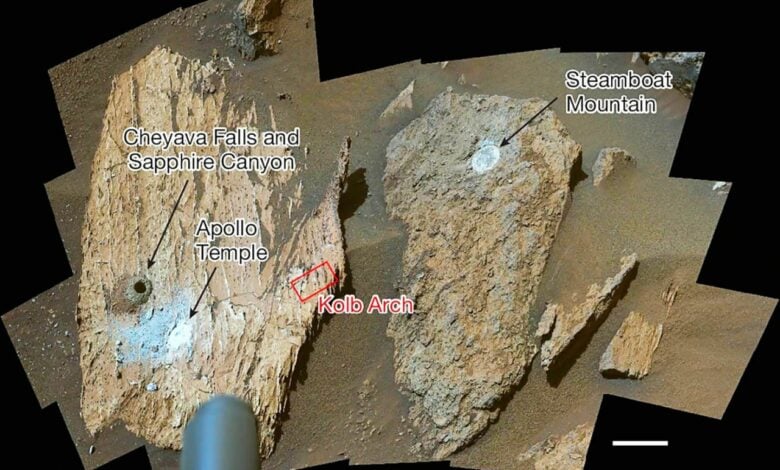
The study focuses on the Sapphire Canyon mudstone core drilled in July 2024 from a rock known as “Cheyava Falls” in Neretva Vallis, an ancient river channel that once fed Jezero Crater’s lake. Researchers identified minerals and microscopic textures that, on Earth, are commonly associated with microbial activity. These include patterns of organic carbon linked with iron, sulfur, and phosphorus, detected using the rover’s SHERLOC and PIXL instruments.
Two minerals, vivianite and greigite, drew particular attention. On Earth, both are often connected to biological processes in oxygen-poor, water-rich environments. Scientists emphasized, however, that nonbiological chemical reactions could also explain the findings.
NASA officials stressed caution, describing the discovery as a potential biosignature rather than proof of past life. The sealed sample is intended for possible return to Earth, where advanced laboratory testing could help determine whether the signals have a biological origin.