
Sheikh Ahmad Qomi: Shia scholar who established Shia presence in Thailand
Sheikh Ahmad Qomi: Shia scholar who established Shia presence in Thailand
———————————-
Sheikh Ahmad Qomi, a Shiite scholar who migrated from the Chaharmardan neighborhood of Qom, succeeded in consolidating the position of Shiites in Thailand through his religious knowledge, commercial integrity, and social leadership.
His legacy is now regarded as an enduring model of the interconnection between religion, politics, and culture in Southeast Asia.
Sheikh Ahmad Qomi, an Iranian Shiite scholar and migrant, moved from Qom to Thailand and, by drawing on his religious learning, honesty in trade, and constructive engagement, won the trust of the king and the people of Siam (present-day Thailand).
By establishing Twelver Shiite communities, organizing religious gatherings, and founding religious institutions, he laid firm foundations for Shiism in that land.
Through receiving the title of “Sheikh al-Islam” at the Siamese court, Sheikh Ahmad Qomi was able to formalize the propagation of Shiism and secure the religious status of the Shiite community.
His activities were not confined to the religious sphere. After being granted the title of “Chao Phraya Ratcha Nayok” (Prime Minister) by the king, he rose to the highest political and executive position in the country. Serving as a senior adviser and minister of the treasury during the reign of King Phra Sorasak, he played a pivotal role in managing social affairs and addressing the concerns of Muslims.
Sheikh Ahmad Qomi established a lasting network of Muslims and Shiites, and his descendants, known as the Bunnag family, continue to be present in Thailand’s political and cultural structures to this day.
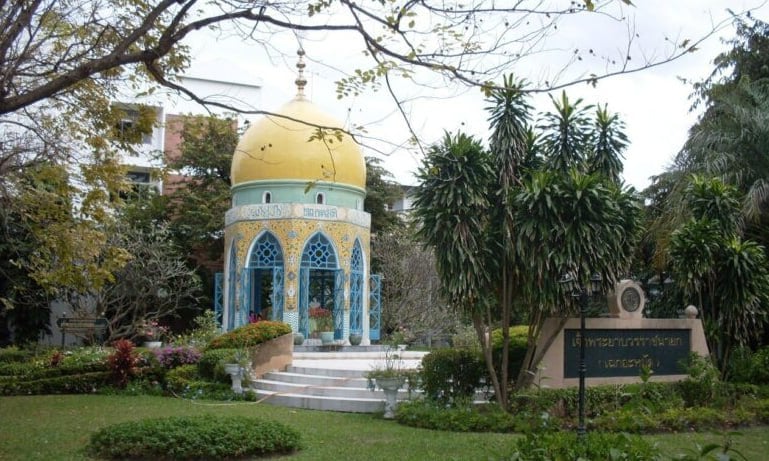
His tomb is located in the city of Ayutthaya, within a university compound, and is recognized as a religious and cultural landmark for Thailand’s Shiite community.
The legacy of Sheikh Ahmad Qomi stands as a prominent example of the interaction between religion, social governance, and the cultural ties between Iran and Thailand.
He provided a model of purposeful migration aimed at spreading the teachings of the Ahl al-Bayt (peace be upon them) while actively engaging with structures of power—an influence that remains evident among Shiite communities in Southeast Asia today.
The role played by this scholar demonstrates that the migration of Shiite scholars not only contributed to the dissemination of religious knowledge but also significantly shaped the social and cultural identity of Muslim communities beyond Iran.