
Abdulaziz Sachedina, Prominent Shia Studies Scholar in the West, Passes Away
Abdulaziz Sachedina, Prominent Shia Studies Scholar in the West, Passes Away
———————————————
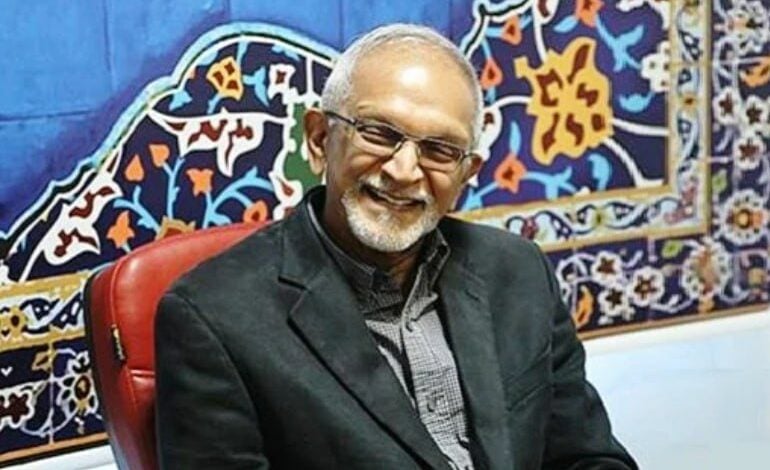
Professor Abdulaziz Abdulhussein Sachedina, a distinguished Islamic scholar and former professor at the University of Virginia and George Mason University, has passed away at the age of 83.
Sachedina was widely recognized for his influential research in comparative Islamic studies, bioethics, human rights and Shia thought. His work had a global impact on interfaith dialogue, contemporary Islamic scholarship and critical approaches to religious ethics.
Born in 1942 (1321 SH) in Tanzania to a family of Indian heritage, Sachedina completed his early education locally before relocating as a teenager to India, where he studied humanities at Aligarh Muslim University. According to reports viewed by Shia Waves Agency, he later travelled to Iran to gain first-hand knowledge of Shiism, studying at Ferdowsi University of Mashhad and engaging with both seminary and academic disciplines.
Sachedina pursued doctoral studies at the University of Toronto, where he wrote his dissertation on the historical development of Mahdism in Twelver Shiism—a study that later formed the basis of his influential book Islamic Messianism.
Beginning his academic career in the 1970s, Sachedina taught for more than three decades at the University of Virginia and later at George Mason University, where he held the Chair in Islamic Studies. His teaching covered Islamic theology (Shia and Sunni), the history of Islamic thought, bioethics, religious pluralism and comparative Qur’anic studies.
According to Aftab Media, his major publications—including Islamic Messianism, The Just Ruler in Shi‘ite Islam, Islamic Biomedical Ethics and Islam and the Challenge of Human Rights—helped advance modern Shia studies and laid the foundation for Islamic bioethics as an academic field.
Sachedina was known as a moral and principled scholar and an advocate of a compassionate understanding of Islam. In 2017, he appeared on Imam Hussein TV’s program Didgah, where he discussed globalization and the governance of Imam al-Mahdi (may God hasten his reappearance).
His writings and research contributed significantly to academic and public understanding of Shiism, human rights and interfaith dialogue. Throughout his career, he sought to build bridges between Islamic teachings and universal human values, promoting coexistence and mutual understanding.
His passing marks a major loss for the global academic community and for scholars of Shia studies worldwide.