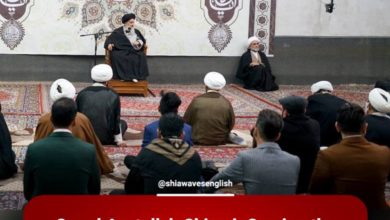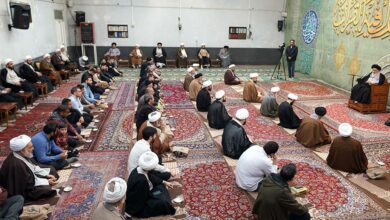

25th Anniversary of Grand Ayatollah Sayyid Muhammad Shirazi’s Passing Commemorated
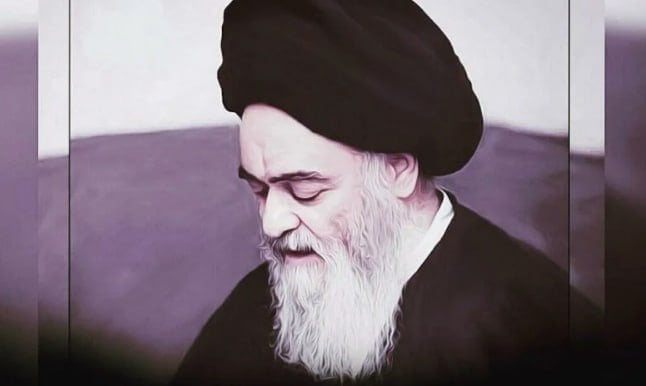
The second of Shawwal marked the 25th anniversary of the passing of Grand Ayatollah Sayyid Muhammad Hosseini Shirazi, a prominent Shia religious authority remembered for his scholarly contributions and his stance against authoritarianism.
Born in 1347 AH in the holy city of Najaf, he later migrated in his youth with his father to Karbala. There, he pursued religious studies in the seminaries under leading scholars, including Sayyid Mirza Mahdi Shirazi and Sayyid Muhammad Hadi Milani, eventually rising to become one of the most distinguished jurists of his time at a young age.
Known as Sultan al-Mu’allifin (the Sultan of Authors), his contributions span theology, politics, and social organization. Grand Ayatollah Shirazi authored more than 1,200 volumes across a wide range of fields, including jurisprudence, Islamic principles, ethics, history, and political thought, reflecting his extensive intellectual influence within Islamic scholarship. Among his most prominent contributions is the 160-volume encyclopedia of Islamic law, addressing religion, science, and modern challenges.
Beyond his academic legacy, he was known for his opposition to oppressive rule. During the era of the Ba’ath Party in Iraq, which imposed restrictions on religious authority and freedoms, he faced significant pressure that ultimately forced him to leave the country.
After relocating to Iran, he continued to face limitations due to his independent views, particularly his advocacy for religious authority remaining separate from state control and his emphasis on individual freedoms and a rational approach to religion.
A quarter-century after his passing, his writings and ideas continue to resonate, inspiring scholars, reformists, and advocates of justice. His intellectual legacy remains influential within seminaries and broader Islamic societies, serving as a reference point for confronting injustice and defending the rights of the people.
The late Grand Ayatullah Syed Muhammad Shirazi promoted non-violent, consultative governance through a council of jurists, human rights, and social reform. His global network of schools, mosques, media, and institutions established the Shirazi school, emphasizing pluralism, revival of Husseini rituals, independence, and transnational Shia outreach, a legacy continued by his esteemed brother, the Supreme Marja Grand Ayatollah Syed Sadiq al-Shirazi.