
UN Commission Reports Rights Violations in Syria, Calls for Security Reforms
UN Commission Reports Rights Violations in Syria, Calls for Security Reforms
——————————-
The United Nations Independent International Commission of Inquiry on the Syrian Arab Republic has warned that Syria’s transitional phase remains “fragile” despite some steps toward reform, citing ongoing human rights violations that could undermine efforts to build a state governed by the rule of law.
More details in the following report:
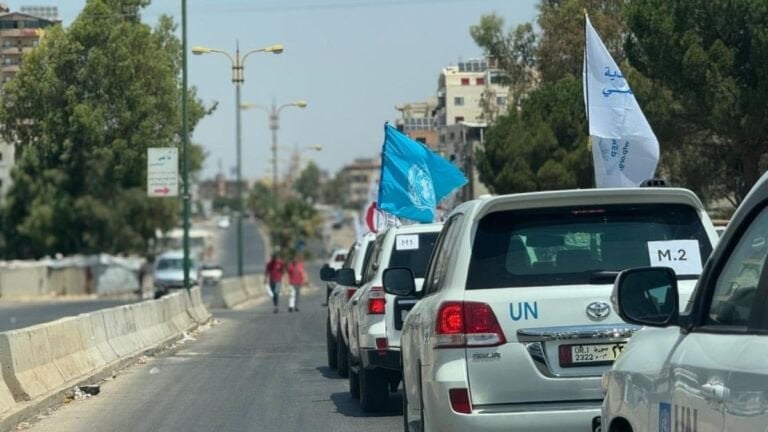
The warning came in a report issued after commissioners visited Syria and held meetings with government officials, human rights defenders, and civil society representatives.
The report noted what it described as a “significant shift” in the country’s political landscape, including the creation of two national bodies focused on transitional justice and the search for missing persons. Syrian authorities have also launched domestic investigations into violent incidents that occurred in the coastal, central, and southern regions during 2025.
However, the commission documented continued serious abuses in several provinces, including Homs, Hama, Latakia, and Tartus. Alleged violations include extrajudicial killings, torture, ill-treatment, deaths in detention, enforced disappearances, and disputes involving housing, land, and property.
According to the report, more than 1,400 people—most of them civilians—were killed during violence in the coastal provinces of Latakia and Tartus as well as Homs and Hama in March 2025. Separate clashes in As-Suwayda in July 2025 resulted in more than 1,500 deaths, involving government forces, local armed groups, and tribal fighters.
The commission said patterns in some incidents suggested potential targeting based on religious affiliation, ethnicity, age, or gender, warning that certain acts could amount to war crimes or crimes against humanity if confirmed.
While Syrian authorities have arrested 14 suspects and begun prosecutions, the commission said accountability mechanisms and security sector reforms remain insufficient, particularly regarding senior leadership.
The report urged comprehensive reforms of the security and judicial sectors, alongside disarmament and reintegration programs for fighters, and called for international support to ensure accountability and rebuild trust between communities and state institutions.