
World Mother Language Day Raises Concerns Over Linguistic Diversity in Afghanistan
World Mother Language Day Raises Concerns Over Linguistic Diversity in Afghanistan
——————————-
As the world marks International Mother Language Day as an occasion to promote cultural and linguistic diversity, concerns are growing over the future of linguistic plurality in Afghanistan under the rule of the Taliban since their return to power in 2021.
In a message issued on the occasion, United Nations Educational, Scientific and Cultural Organization (UNESCO) warned of the increasing global threat to languages, stressing that the disappearance of any language represents a loss to humanity’s cultural heritage. UNESCO emphasized that linguistic diversity is a key foundation for building peaceful, inclusive, and dignified societies.
Afghanistan is known for its rich linguistic and cultural diversity. Major languages such as Dari and Pashto are widely used alongside Uzbek, Turkmen, Balochi, Nuristani, and dozens of local dialects. However, recent years have witnessed developments that have sparked debate about the future of this diversity.
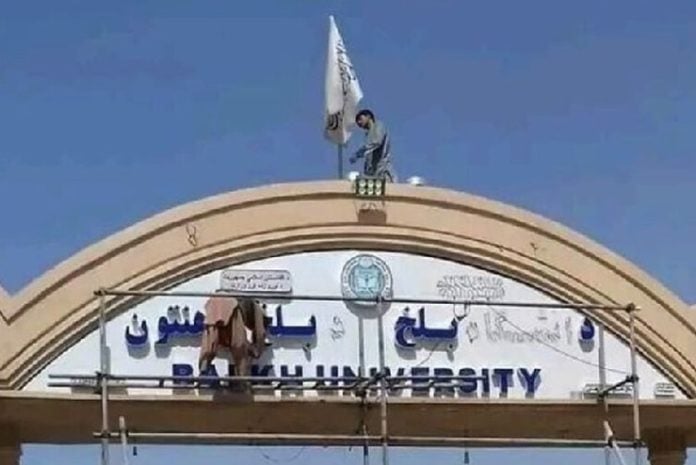
Local reports have pointed to the removal or modification of Dari-language signage in several government institutions, replacing them with Pashto terminology. Such changes have reportedly occurred at Balkh University and in some health facilities in Herat. Critics argue that these steps go beyond routine administrative measures and reflect a broader tendency toward prioritizing a single language in the public sphere.
Observers have also noted increased reliance on Pashto in official correspondence within certain ministries and government departments, with employees instructed to use specific terminology, despite Dari being an official language spoken by millions of citizens. Cultural activists say these policies weaken the balanced presence of Afghanistan’s languages in public life.
Concerns have also emerged in the media and cultural sectors over restrictions affecting the production and dissemination of content in local languages, raising fears of a gradual decline in their use in education, media, and public discourse.
Experts warn that undermining linguistic diversity could have long-term consequences, as language carries collective memory, literature, oral heritage, and social values. They note that marginalizing certain languages may deepen feelings of exclusion among ethnic and cultural communities and affect national cohesion.