
Continued Targeting of Shia Communities in Afghanistan, Pakistan Amid Accusations of Security Failures
Continued Targeting of Shia Communities in Afghanistan, Pakistan Amid Accusations of Security Failures
————————————–
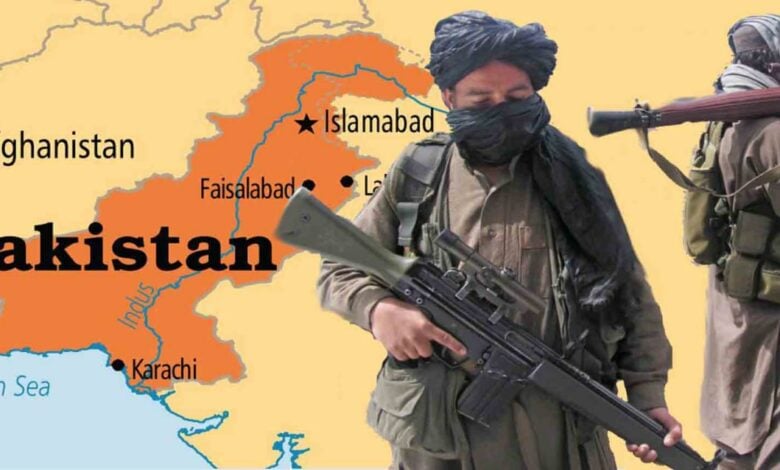
Shia communities in Afghanistan and Pakistan have for years been subjected to a series of deadly terrorist attacks marked by shared patterns, most notably efforts to inflame sectarian divisions and undermine social cohesion. The violence has been accompanied by growing criticism over what is described as government failure to provide adequate protection for this segment of society.
In the latest incident, Pakistani authorities announced that at least 31 people were killed and 169 others injured in a suicide bombing that targeted a Shia mosque in the capital, Islamabad, although some local sources put the death toll at around 100. According to The Express Tribune, citing an assistant police commissioner, many of the wounded remain in critical condition, raising fears that the death toll could increase.
The explosion occurred on Friday during congregational prayers at the Sayyida Khadija al-Kobra mosque in the Tarlai area of Islamabad. Witnesses said the blast was powerful and caused widespread panic in the surrounding area. News agencies reported that the so-called Islamic State (ISIS) claimed responsibility for the attack.
The bombing is part of a long history of assaults against Shia communities in Pakistan, which observers say reflect a persistent wave of sectarian violence that has drawn both domestic and international concern, particularly due to the repeated targeting of places of worship and religious gatherings.
Similar reports indicate that terrorist attacks against Shias in Afghanistan and Pakistan are driven by a shared objective: deepening sectarian and doctrinal divisions and turning religious differences into violent conflict that undermines long-standing coexistence. Such attacks are often carried out at sensitive religious times, including Friday prayers and mourning ceremonies, to maximize psychological and social impact.
Extremist groups in both countries employ comparable tactics, especially suicide bombings, suggesting shared operational models and cross-border networks aimed at spreading fear and destabilizing security. Their propaganda seeks to inflame sectarian hostility and incite violence within society.
Critics have accused the governments of Afghanistan and Pakistan of negligence in protecting Shia communities, noting that many religious centers lack sufficient security despite repeated warnings. Analysts argue that sectarian and ethnic biases within some political and security structures may affect protection priorities. In Afghanistan, Shia mosques and educational centers—particularly those linked to the Hazara community—have been targeted, highlighting the overlap of sectarian and ethnic motives. In Pakistan, despite large-scale security operations, extremist groups continue to carry out deadly attacks, raising ongoing questions about the effectiveness of government measures to curb sectarian violence.