
Restricting Education in Afghanistan Constitutes Cultural Genocide, Say Rights Activists
Restricting Education in Afghanistan Constitutes Cultural Genocide, Say Rights Activists
————————————-
The Human Rights Activists Union has warned that Afghanistan is experiencing a dire situation, describing the Taliban’s restrictions on education as a form of cultural genocide that silences voices and limits awareness.
The Human Rights Activists Union said these restrictive measures imposed by the Taliban have already had severe consequences and threaten the future of younger generations, Khaama Press reported.
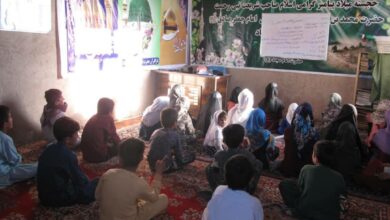
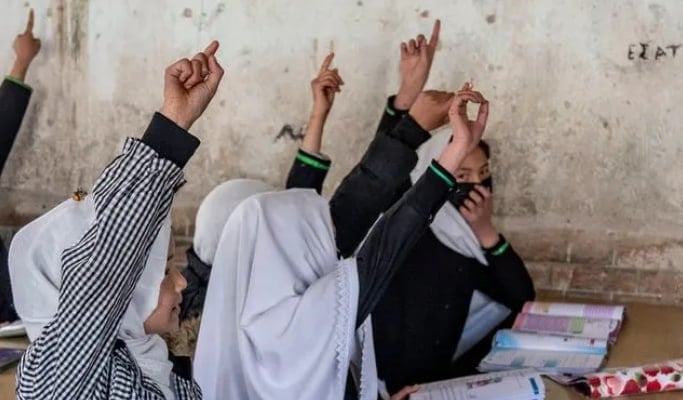
Since retaking power in 2021, the Taliban have imposed strict restrictions on the country’s education system. Girls above the sixth grade are barred from schools, female students are excluded from universities, and many women teachers have lost their jobs. Curricula have been altered, and some books have been banned from publication and sale, further limiting access to knowledge.
The Human Rights Activists Union emphasized that the Taliban’s actions not only suppress education but also aim to erase the cultural memory of Afghanistan society, endangering its social and intellectual development. They noted that the future of young people can only be secured through knowledge, freedom, and human dignity.
International organizations and UN officials have expressed concern over the exclusion of girls and women from education, warning that it is a major setback for Afghanistan society. They have urged the Taliban to reopen schools and universities for female students and allow all citizens to participate fully in education and public life.
Education experts have highlighted the long-term impact of these restrictions, saying that depriving an entire generation of schooling will deepen poverty, weaken the workforce, and slow national recovery. The lack of access to education threatens not just individual rights but the country’s economic and social stability.
The Human Rights Activists Union’s statement reflects broader concerns among Afghanistan civil society, which argues that limiting education undermines both human rights and cultural identity. The restrictions have created a climate of fear and uncertainty, leaving many young people without hope for the future.
Without urgent change, Afghanistan risks continued international isolation, deteriorating development indicators, and further erosion of social and cultural progress. Experts call on the global community to maintain pressure on the Taliban to reverse restrictive policies and restore access to education for all.