
Restoration Project Preserves Heritage of Sacred Alawi Dome in Najaf
Restoration Project Preserves Heritage of Sacred Alawi Dome in Najaf
———————————–
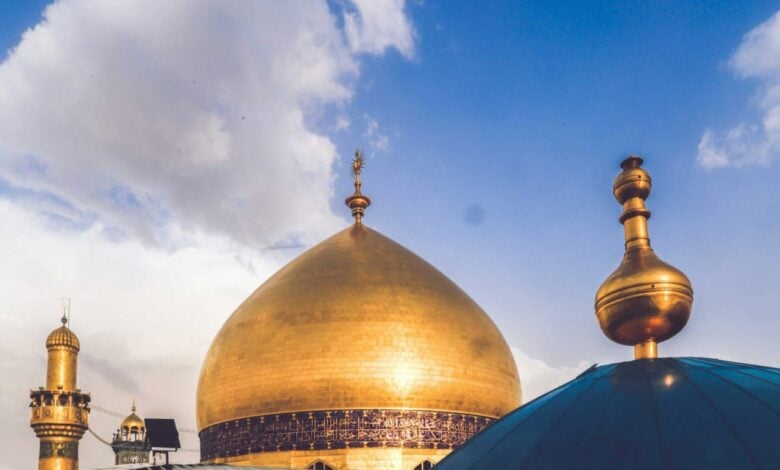
The project to re-gild the sacred Alawi Dome at the Imam Ali (peace be upon him) Holy Shrine marks a major milestone in preserving one of the most important religious and architectural landmarks in the Islamic world.
More details in the following report:
The work began after receiving approval from the Supreme Religious Authority, following a detailed review of the project’s technical plans and an emphasis on preserving the original gold plates and returning them to their original positions.
Historical records indicate that the first comprehensive gilding of the dome and its minarets dates back to the 12th century AH, when blue tiled cladding was replaced with copper plates coated in pure gold. These plates were decorated with Quranic verses and poetic inscriptions in Arabic, Persian, and Turkish, with completion dates recorded on the golden band encircling the dome’s neck.
Over the decades, the dome underwent several restoration efforts, most notably in the late 1960s, when more than 50 kilograms of gold were used to re-gild its upper section. However, parts of the structure later suffered damage and alterations, particularly during the military events in Najaf in 1991.
After 2003, a comprehensive plan was launched to restore removed architectural elements and rehabilitate historic enamel-inlaid bands and plates. The re-gilding project was carried out in two phases: the first involved the dome’s neck, completed in 2014 using approximately 45 kilograms of gold, while the second focused on the upper dome, supported by specialized workshops and modern engineering techniques.
A key feature of the project was the reconstruction of the golden crown crowning the dome. A replica matching the original was produced using archival photographs, gilded with pure gold, and installed in 2016 during official and public ceremonies.
Project officials emphasize that the restoration went beyond aesthetics, aiming to protect historical and architectural evidence, repair structural damage, and ensure the sustainability of the shrine for future generations. The project concluded in late 2016, restoring the Alawi Dome’s iconic brilliance to the skyline of Najaf.