
Human Rights Report: Taliban Approves Judicial Law Legalizing Slavery, Violence Against Children
Human Rights Report: Taliban Approves Judicial Law Legalizing Slavery, Violence Against Children
—————————-
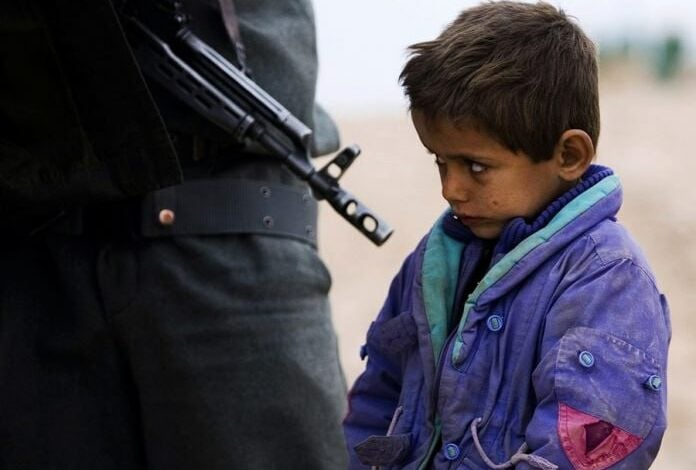
A new report issued by the human rights organization Al-Tasamuh states that the Taliban, through the adoption of new judicial principles, have not only formalized slavery but also permitted physical violence against children while ignoring restrictions on other forms of repression.
According to the report, the law—comprising 119 articles and signed by Taliban leader Hibatullah Akhundzada—defines only limited forms of prohibited violence, such as bone fractures or skin lacerations. Beating, psychological humiliation, and sexual abuse are not criminalized in the absence of such injuries.
Article 48 of the law allows for the punishment of children aged ten and above on religious grounds. The legislation also entrenches a system of slavery through repeated references to the term “slave” in multiple provisions, in violation of international law and human rights conventions. The law further authorizes the killing of “rebels,” a category that includes activists and political opponents, and enables arbitrary violence against individuals accused of committing “sins.”
The report notes that the law classifies citizens into four social classes, with penalties varying according to social status. It draws clear distinctions between religious scholars, nobles, and lower classes, undermining the principle of equality before the law.
Religiously, the law applies exclusively to followers of the Hanafi school of jurisprudence, criminalizing any deviation from it. It also bans cultural practices such as dancing without providing clear definitions, opening the door to arbitrary arrests.
Al-Tasamuh said the law “contradicts international human rights standards, fair trial principles, and fundamental freedoms,” and called on the international community, including the United Nations and the European Union, to take urgent action.
The report concludes that the adoption of this law reflects the Taliban’s transformation from an armed group into an ideological judicial state based on systematic discrimination and violence, increasing the risk of mass displacement of Afghans and further complicating prospects for international recognition.