
Multi-Storm Weather System Drives Deadly Flooding Across Southeast Asia
Multi-Storm Weather System Drives Deadly Flooding Across Southeast Asia
………
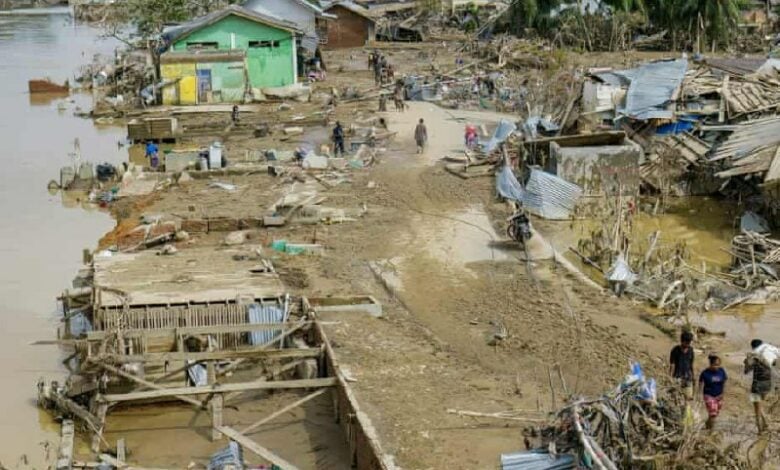
Severe flooding in Thailand has left more than 170 people dead, prompting an apology from the prime minister, who acknowledged that the government had failed to adequately protect citizens, The Observer reported. The crisis underscores how extreme weather is increasingly testing disaster-preparedness measures in regions already prone to climate-related hazards. Although communities worldwide have become more resilient over the past century, the widespread destruction in Thailand has renewed concerns about forecasting limitations and rising environmental risks.
The flooding disaster was triggered last week when a rare storm system developed over the Malacca Strait, which separates Indonesia, Malaysia, and southern Thailand. Cyclone Senyar, unusual for forming so close to the equator, intensified when Typhoon Koto and Cyclone Ditwah converged in a three-storm pattern. The combined impact of these systems, together with seasonal monsoon rains, led to destructive flooding and landslides across several Asian countries.
Across Sri Lanka, Indonesia, Malaysia, and Thailand, more than 1,100 people have died, with hundreds still missing and millions displaced from their homes. The rising toll comes despite global advances in disaster early-warning tools, such as supercomputer-based storm modeling and evacuation systems, which have significantly reduced casualties from natural hazards in recent decades.
Experts say the unpredictability of shifting weather patterns remains a major challenge, especially as climate change influences storm behavior. Even advanced forecasting systems have shown reduced reliability, leading Australia’s meteorological agency this year to discontinue its seasonal cyclone predictions due to environmental uncertainty. Scientists also note that hotter conditions intensify monsoon rainfall and may strengthen tropical cyclones, worsening flood risks across Southeast Asia.
Local officials in Thailand faced criticism for a slow response, with residents in Hat Yai reporting delayed alerts and limited rescue resources. The city, which saw more than 60 centimeters of rain in three days, is built on low-lying terrain that naturally channels water into densely populated areas, increasing the speed and severity of flooding. Analysts say the situation highlights the importance of long-term adaptation strategies.
While countries such as Bangladesh have reduced storm-related casualties through comprehensive alert networks, rapid development on floodplains and coastal zones continues to heighten exposure to rising waters elsewhere. Authorities warn that without stronger planning and improved resilience, similar disasters will become increasingly difficult to contain in a warming world.