
Study Reveals Diet of Mesopotamian Populations 5,000 Years Ago

Study Reveals Diet of Mesopotamian Populations 5,000 Years Ago
———————-
A recent scientific study has uncovered new details about the diet of ancient residents of Mesopotamia using an advanced technique based on zinc isotope analysis in tooth enamel.
Researchers were able to reconstruct key aspects of the diet of populations in southern Iraq during the third millennium BCE, a period marked by the rise of Sumerian civilization urban centers.
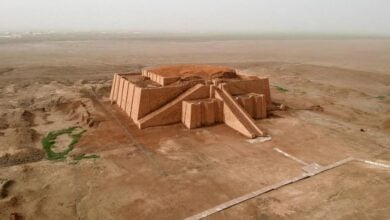
The findings were published in the journal Proceedings of the National Academy of Sciences and focused on the archaeological site of Tell Abu Tbeirah, located near Ur in southern Iraq. The site dates back to the early Sumerian period.
Researchers noted that the site represents a non-elite urban community, offering a rare opportunity to understand the daily lives of ordinary people in Sumerian cities, rather than the elite-focused narratives typically found in historical records.
Results showed that the population’s diet was primarily based on cereals such as barley and wheat, with limited consumption of animal protein.
The study also found that fish, despite the site’s proximity to river systems and marshlands in southern Iraq, was not a major component of the diet. Researchers suggested that cultural and economic factors may have influenced food consumption patterns at the time.