
Regional Warnings Follow Remarks on “Greater Israel” as Governments Reject Any Challenge to Sovereignty
Regional Warnings Follow Remarks on “Greater Israel” as Governments Reject Any Challenge to Sovereignty
——————————————–
Remarks attributed to the U.S. ambassador to Israel, Mike Huckabee, have triggered wide regional and international criticism after comments aired in a media interview were interpreted as endorsing a religious claim to territory stretching from the Nile to the Euphrates—an idea associated in some religious discourse with the concept of “Greater Israel.”
More details in the following report:
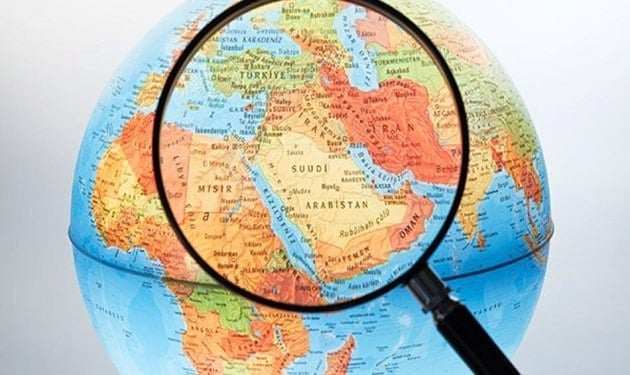
The comments, broadcast in a program hosted by Tucker Carlson, referenced a theological interpretation of a biblical promise to the prophet Abraham. As presented in the interview, the claim was understood to encompass areas within Egypt, Jordan, Lebanon, Syria, Iraq, and parts of Saudi Arabia—prompting sharp reactions from Arab and Muslim capitals.
Several regional governments described the remarks as provocative and harmful to regional security and stability, stressing that any suggestion affecting internationally recognized borders constitutes an infringement of state sovereignty. U.S. officials later said the comments did not reflect a change in official American policy and were taken out of context.
Analysts noted that statements by a senior diplomatic representative carry political weight beyond personal opinion. Hussein al-Deek, a professor of international relations at University of Haifa, said such rhetoric has deep political and religious implications and conflicts with principles of international law. Lebanese analyst Ghaleb Sarhan linked the remarks to currents within conservative evangelical politics in the United States, arguing they are often used to bolster support for Israel but send inflammatory signals to the region.
Iraqi politician Mithal al-Alusi downplayed the practical impact, urging regional states to focus on internal stability rather than escalate responses.
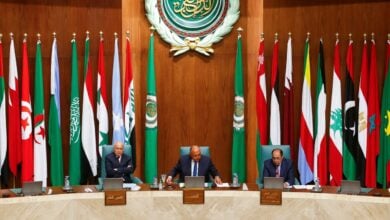
Diplomatically, a joint statement by Arab states—including Saudi Arabia, the United Arab Emirates, Egypt, Jordan, Qatar, Kuwait, Lebanon, Oman, and Bahrain—along with the Palestinian Authority, the Organization of Islamic Cooperation, and the Arab League, rejected any proposal that undermines territorial integrity or legitimizes occupation. The statement reaffirmed that a just and lasting peace requires ending the occupation and establishing a Palestinian state on the 1967 borders, in line with international law and UN resolutions.