

Iran: 37 Workers Killed and 216 Injured in Commuting Accidents Over Eight Months
Iran: 37 Workers Killed and 216 Injured in Commuting Accidents Over Eight Months
——————————————
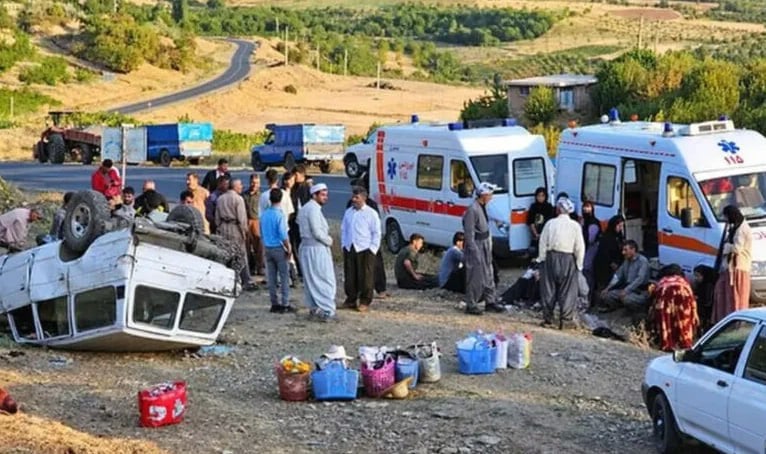
At least 37 workers have been killed and 216 others injured in 27 road accidents involving workers travelling to and from their workplaces across Iran during the first eight months of the Iranian calendar year 1405 (March–November 2026), according to a report by the Iranian Labour News Agency (ILNA). The figures have renewed concerns over inadequate safety oversight, ageing transport fleets and the risks faced by workers commuting to industrial and remote employment sites.
According to ILNA, the accidents occurred between the beginning of the Iranian year and the end of Aban (November 21, 2026). The agency compiled the figures from media reports, meaning they do not represent a comprehensive official national accident count.
The report identified several recurring risk factors, including unsafe vehicles, driver fatigue and drowsiness, inadequate industrial and rural roads, and the awarding of transport contracts to potentially unqualified contractors.
Kerman province recorded the highest number of incidents, with five accidents, followed by West Azerbaijan with four and Sistan and Baluchestan with three. However, Ilam province recorded the highest death toll after a bus carrying workers from an oil company in Dehloran overturned, killing 13 people. Another fatal accident involving employees of the South Pars Gas Complex in Bushehr province claimed eight lives, while Kerman recorded six worker fatalities.
The report also highlighted accidents involving seasonal agricultural workers and fuel carriers, whose commuting-related incidents may be inadequately reflected in conventional occupational accident statistics.
Labour activists and safety specialists have called for stronger monitoring of worker transportation services, including regular vehicle inspections, medical assessments of professional drivers, monitoring of driving and rest hours, and the installation of GPS-based safety systems.
They have also urged authorities to strengthen contractor qualification requirements and ensure that transport companies are not selected solely on the basis of the lowest bid, at the expense of passenger safety.
The report further raises questions about employers’ legal responsibilities for workers’ transportation. Under Articles 85, 91 and 95 of Iran’s Labour Law, employers have obligations concerning occupational health and safety. Article 152 also requires employers to provide suitable transportation when workplaces are located far from workers’ residences and public transport is insufficient.
Labour representatives have additionally called for improvements to dangerous industrial and rural roads, particularly routes serving factories, mines and other major employment centres.
The repeated loss of workers during their daily journeys has intensified demands for clearer accountability among employers, transport contractors and relevant authorities, as well as stronger preventive measures to ensure that commuting to work does not become a major occupational safety hazard.