
France’s Hijab Debate Expands from Schools to Universities Amid Calls for Wider Ban
France’s Hijab Debate Expands from Schools to Universities Amid Calls for Wider Ban
——————————————-
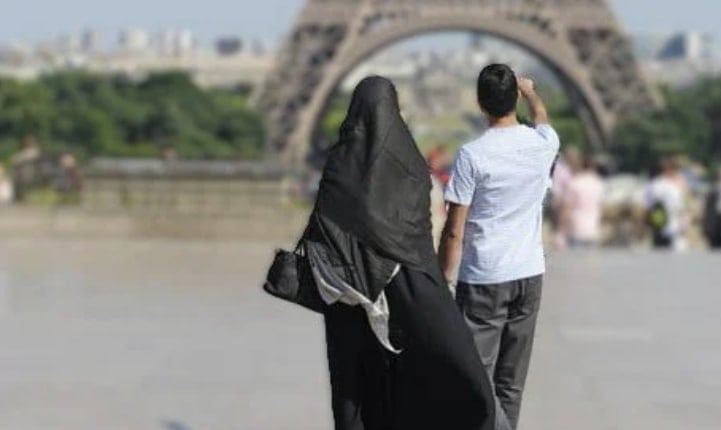
The debate over the hijab and religious symbols in France has intensified, with political calls growing to extend existing restrictions from public schools to universities and other areas of public life.
The controversy dates back to October 1989, when three Muslim students were expelled from a middle school in Creil, north of Paris, after refusing to remove their headscarves in class. The case triggered a nationwide debate over the relationship between the hijab and France’s principle of secularism.
Later that year, France’s Council of State ruled that wearing religious symbols by students did not, by itself, violate secularism. However, the issue remained politically sensitive, leading to the 2004 law banning “conspicuous” religious symbols in public schools, which became closely associated with restrictions on Muslim girls wearing hijab.
Further restrictions followed in 2010 with a ban on face coverings in public spaces. The debate later expanded to include Muslim mothers wearing hijab while accompanying students on school trips, with the Council of State confirming in 2013 that they could continue to do so.
The issue has recently returned to the forefront, including after French authorities barred members of the national delegation from wearing hijab during the 2024 Paris Olympics.
Critics of expanding the ban warn that such measures could affect religious freedoms and the rights of adult Muslim women, while supporters argue they are necessary to defend France’s secular model.