
Severe Drought Pushes Middle East Rivers Toward Historic Lows
Severe Drought Pushes Middle East Rivers Toward Historic Lows
————————————
A deepening multi-year drought has driven parts of the Middle East into one of their most acute water crises in decades, with major river systems in Iraq, Syria, Iran and Jordan showing sharp declines in flow and storage levels, according to regional reports viewed by Shia Waves Agency.
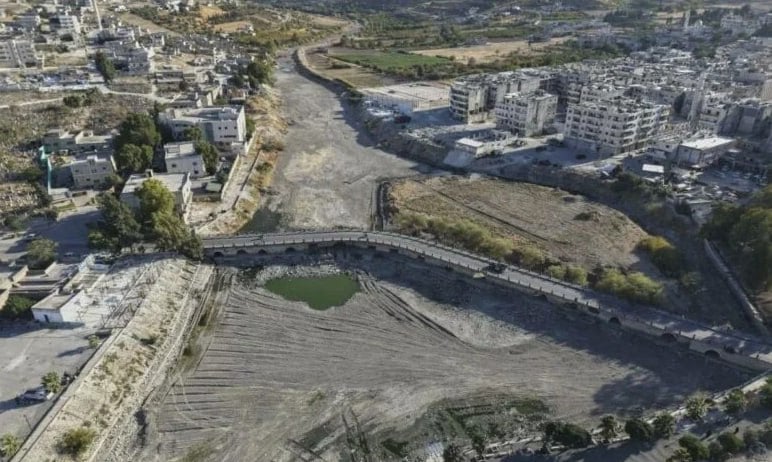
Data from local authorities and satellite observations point to a sustained drop in water levels across the Tigris, Euphrates, Orontes (al-Asi) and Barada rivers, raising concerns over long-term water security, food production and social stability.
In Iraq—one of the worst-affected countries—2025 has been described by national officials as the driest year since 1933. Water inflow into the Tigris and Euphrates has fallen by an estimated 27 percent, reducing irrigation supplies and accelerating the depletion of reservoirs.
Satellite images released by international monitoring agencies indicate that several major Iraqi water bodies have receded sharply. Analysts report that Lake Tharthar, the country’s largest lake, has experienced significant water loss compared to 2020, coinciding with wider hydrological stress across the region.
Environmental authorities in Syria and Jordan have also warned of declining river flows linked to reduced rainfall, rising temperatures and prolonged drought cycles. In parts of eastern Syria, farmers say river levels have reached near-zero flow during peak summer months, disrupting agriculture and drinking-water supplies.
Experts attribute the crisis to a combination of climate-related factors, upstream water management, over-extraction of groundwater and population pressure. Hydrologists warn that without coordinated regional management and long-term adaptation strategies, the Middle East could face worsening shortages affecting millions.
Governments and international organisations have urged urgent mitigation measures, including modernising irrigation systems, increasing water-use efficiency and expanding monitoring of river basins to prevent further deterioration.