
Coral–Plankton Balance Linked to Ancient Climate Shifts, Study Finds
Coral–Plankton Balance Linked to Ancient Climate Shifts, Study Finds
…………..
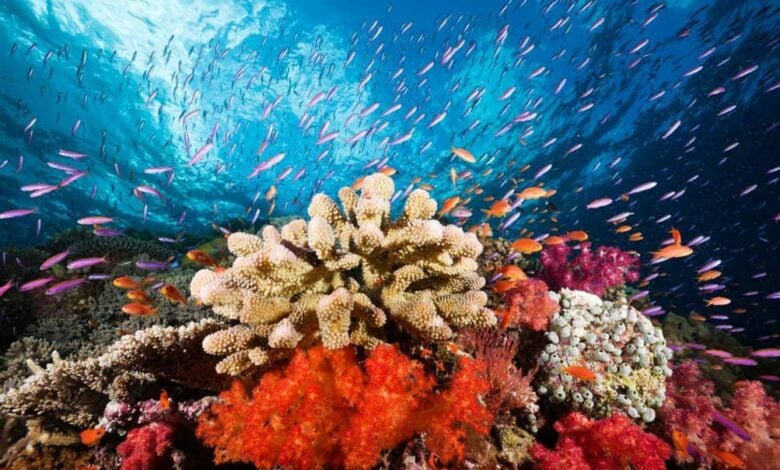
The distribution of coral reefs over the past 250 million years has played a significant but unexpected role in shaping Earth’s climate, according to new research reported by New Scientist. Scientists have long understood that coral reefs release carbon dioxide as they build calcium carbonate skeletons. However, the new study highlights how competition for key minerals between shallow-water corals and deep-sea plankton can influence global temperatures.
Researchers led by Tristan Salles at the University of Sydney modelled interactions among plate tectonics, ocean chemistry, climate patterns and sediment flow through geological time. Their simulations show that when tectonic activity creates wide continental shelves—prime habitat for reef-building corals—coral growth intensifies, consuming calcium and carbonate ions that would otherwise support carbonate-forming plankton in the deep ocean. This shift reduces deep-sea carbonate burial and can drive long-term increases in atmospheric CO₂.
The team identified three major intervals—the mid-Triassic, mid-Jurassic and late Cretaceous—when extensive coral reef formation disrupted the carbon cycle, contributing to notable global warming events. Restoring equilibrium between coral-dominated shallow seas and plankton-driven deep-sea carbon burial can take hundreds of thousands to millions of years, Salles says.
While corals can help moderate excess nutrients under natural conditions, Salles notes that today’s rapid, human-driven CO₂ emissions are simultaneously warming and acidifying oceans too quickly for these ancient feedbacks to operate. Both corals and plankton are already declining, raising the risk of severe ecological consequences.
Alexander Skeels of the Australian National University says the findings underscore the tightly connected feedbacks between life and climate, showing how biological systems have long shaped atmospheric carbon levels over geological timescales.